

India to Showcase Indigenous Defence Capabilities at VISV-2026: Key Highlights & Significance
India is set to showcase its indigenous defence technologies at VISV-2026 on 30 October 2026 in New Delhi. Organised by DRDO and CENJOWS, the event will host Defence Attachés from around 60 nations. Learn about the focus areas, importance for Atmanirbhar Bharat, and key exam points.
India is taking another important step in strengthening its position as a reliable defence partner and technology provider. On 30 October 2026, the country will host विश्व-2026 (VISV-2026) at the Manekshaw Centre in New Delhi. The event, jointly organised by the Centre for Joint Warfare Studies (CENJOWS) and the Defence Research and Development Organisation (DRDO), aims to present India’s homegrown defence solutions to the world and build stronger partnerships with friendly nations.
Minister of State for Defence Sanjay Seth is scheduled to inaugurate the programme. Defence Attachés from around 60 partner countries have been invited. Attendance is strictly by invitation. This gathering offers a focused platform where India can demonstrate real progress in defence research, development and production under the Atmanirbhar Bharat vision.
What Exactly is VISV-2026?
VISV stands for Vision, Innovation, Synergy and Values. The full title of the event is “DRDO Defence Solutions for Partner Nations: Showcasing Defence Capabilities, Strengthening Global Partnership.”
Unlike large public defence exhibitions, VISV-2026 is a closed-door strategic seminar. It brings together representatives from India’s defence establishment, industry, academic institutions and the diplomatic community. The main goal is simple yet powerful: show what India has developed on its own soil and open doors for technology cooperation, joint development and strategic partnerships.
According to official information shared by CENJOWS, the programme will feature technical sessions covering multi-domain capabilities across aeronautical, land and naval warfare systems. Discussions will also focus on the role of Defence Attachés in building lasting defence ties.
Key Technologies and Focus Areas
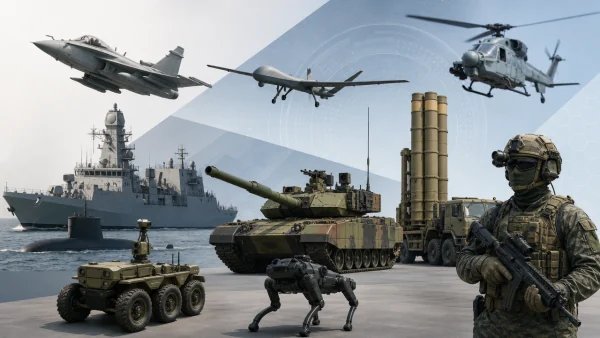
DRDO will highlight its work in several critical domains that form the backbone of modern warfare. These include:
- Aerospace systems – aircraft and related technologies that support air power
- Land and naval systems – platforms and equipment for ground and maritime operations
- Sensors and communication systems – tools that help detect threats and share information quickly and securely
- Missile systems – a major strength of Indian defence research
- Microelectronics and computing solutions – the foundation for advanced electronics in weapons and platforms
- Soldier support systems – technologies that improve the safety, endurance and effectiveness of troops on the ground
These areas reflect a clear shift. India is no longer only talking about self-reliance. It is ready to demonstrate tangible capabilities and invite partners to explore collaboration. You can read more about the official announcement from CENJOWS here and detailed coverage on Indian Masterminds here.
Why This Event Matters for India
Modern defence is no longer just about buying weapons. It is about technology ownership, supply chain security and the ability to support partners over the long term. VISV-2026 comes at a time when India is making visible progress on all these fronts.
Just a few days earlier, the Defence Acquisition Council approved capital acquisition proposals worth approximately ₹2.12 lakh crore. Importantly, around 82 per cent of these are to be sourced from the Indian industry. This shows that policy and procurement are moving in the same direction as research and development.
The event also sits alongside other recent initiatives such as the Indian Navy’s Swavlamban 2026 seminar, which focused on innovation and indigenisation. Together, these efforts send a consistent message: India wants to move from being a major importer to becoming a trusted exporter and co-developer of defence technology.
For partner nations, especially those looking for affordable, reliable and transferable technology, India offers a practical alternative. The presence of Defence Attachés from about 60 countries underlines the growing interest in what India has to offer.
Exam-Oriented Key Points – Quick Reference Table
For students preparing for competitive exams, the following table summarises the most important facts about VISV-2026 and related developments:
| Point | Details |
|---|---|
| Full Form of VISV | Vision, Innovation, Synergy and Values |
| Date & Venue | 30 October 2026, Ashoka Hall, Manekshaw Centre, New Delhi |
| Organisers | CENJOWS in collaboration with DRDO |
| Inaugurated by | Minister of State for Defence Sanjay Seth |
| Participants | Defence Attachés from around 60 partner nations (invitation only) |
| Main Focus | Showcasing indigenous defence capabilities and strengthening global partnerships |
| Key Technology Areas | Aeronautical, Land & Naval systems, Sensors, Communications, Missiles, Microelectronics, Soldier support systems |
| Related Recent Development | DAC approved ~₹2.12 lakh crore acquisitions (82% indigenous) |
| Policy Link | Atmanirbhar Bharat / Make in India in Defence |
Exam Tip: Remember the full form of VISV, the exact date, the two organising bodies, the number of partner nations, and the link with Atmanirbhar Bharat. These are high-probability points for current affairs questions.
Broader Context of India’s Defence Self-Reliance Journey
VISV-2026 does not stand alone. It is part of a larger national effort. In recent years, India has steadily increased the share of domestic content in defence procurement. Defence public sector undertakings, private companies, startups under iDEX, and research institutions are all contributing.
Technologies such as Air Independent Propulsion for submarines, advanced missile systems, sensors and microelectronics are examples of areas where Indian laboratories and industry partners have made measurable progress. Events like VISV-2026 help convert this technical progress into diplomatic and commercial opportunities.
For more background on India’s recent defence acquisition push, you may refer to coverage of the Defence Acquisition Council decisions available through reliable national media reports.
Looking Ahead
VISV-2026 is more than a one-day seminar. It is a clear signal that India is confident enough to place its indigenous technologies before an international audience of defence professionals. By focusing on multi-domain capabilities and practical partnership opportunities, the event strengthens both India’s strategic autonomy and its role as a responsible defence partner.
As the world continues to face complex security challenges, countries that can offer reliable technology, transparent cooperation and long-term support will gain importance. India’s efforts through platforms like VISV-2026 show that it is preparing itself for exactly that role.
The success of such initiatives will ultimately depend on how effectively research, industry and diplomacy work together. The 30 October event at Manekshaw Centre is one more step in that direction.

Your daily source for simple and useful Current Affairs for Government & Competitive Exams. Stay updated with important national and international news, government schemes, awards, appointments, sports, and more. Learn Daily. Stay Updated. Prepare Better. 🇮🇳



Comments (0)